Global distribution of fluoroquinolone and colistin resistance and associated resistance markers in escherichia coli of swine origin – a systematic review and meta-analysis
Hayer, S. S. ; Casanova-Higes, A. (Universidad de Zaragoza) ; Paladino, E. ; Elnekave, E. ; Nault, A. ; Johnson, T. ; Bender, J. ; Perez, A. ; Alvarez, J.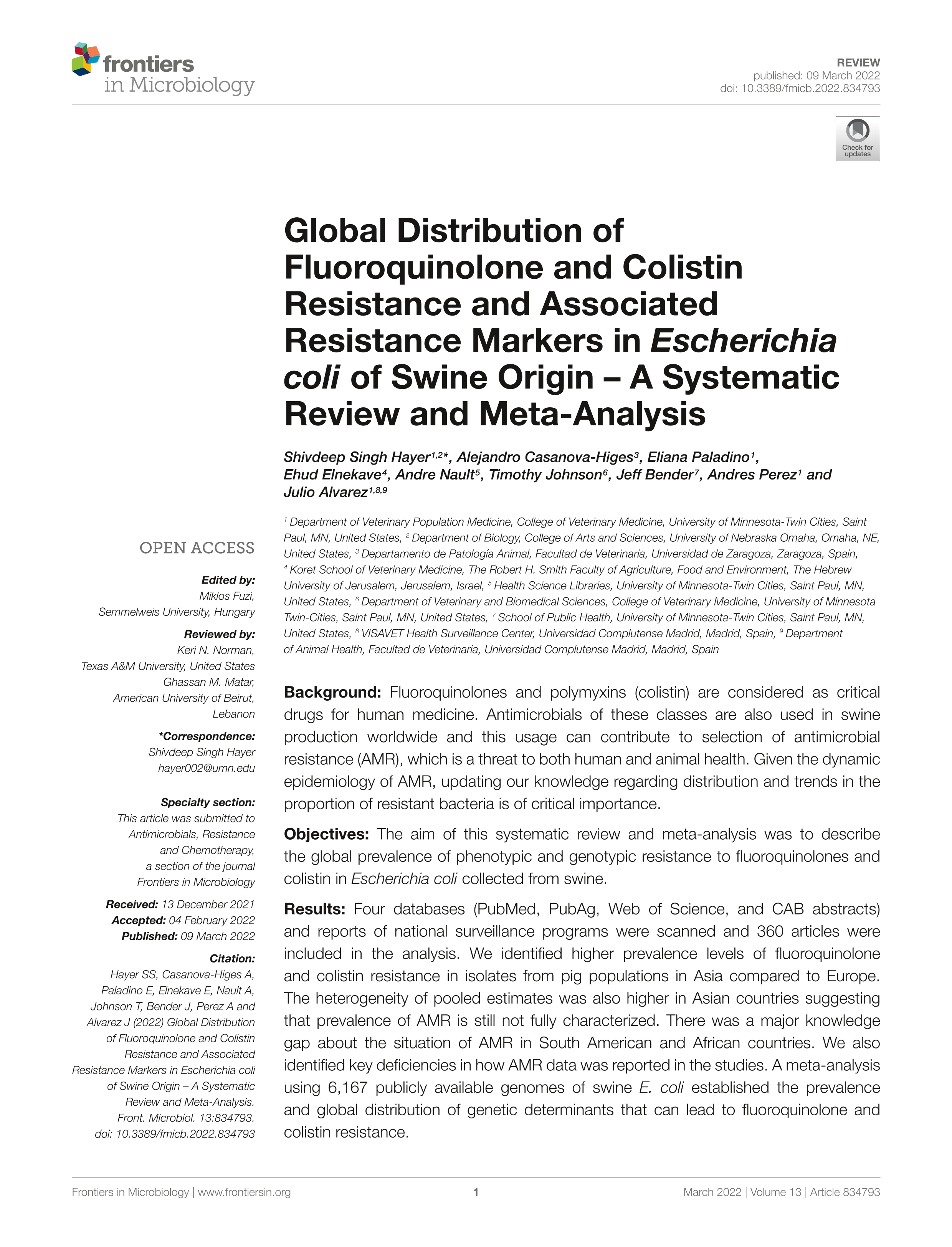
Resumen: Background: Fluoroquinolones and polymyxins (colistin) are considered as critical drugs for human medicine. Antimicrobials of these classes are also used in swine production worldwide and this usage can contribute to selection of antimicrobial resistance (AMR), which is a threat to both human and animal health. Given the dynamic epidemiology of AMR, updating our knowledge regarding distribution and trends in the proportion of resistant bacteria is of critical importance. Objectives: The aim of this systematic review and meta-analysis was to describe the global prevalence of phenotypic and genotypic resistance to fluoroquinolones and colistin in Escherichia coli collected from swine. Results: Four databases (PubMed, PubAg, Web of Science, and CAB abstracts) and reports of national surveillance programs were scanned and 360 articles were included in the analysis. We identified higher prevalence levels of fluoroquinolone and colistin resistance in isolates from pig populations in Asia compared to Europe. The heterogeneity of pooled estimates was also higher in Asian countries suggesting that prevalence of AMR is still not fully characterized. There was a major knowledge gap about the situation of AMR in South American and African countries. We also identified key deficiencies in how AMR data was reported in the studies. A meta-analysis using 6, 167 publicly available genomes of swine E. coli established the prevalence and global distribution of genetic determinants that can lead to fluoroquinolone and colistin resistance. Conclusion: This study provides the most comprehensive information on prevalence of phenotypic and genotypic resistance to key antimicrobials in pig populations globally. There is a need to establish national surveillance programs and effective policies, particularly in certain world regions, to curtail the threat of evolution of resistant isolates in swine production that can potentially contribute to public health detrimentally. Copyright © 2022 Hayer, Casanova-Higes, Paladino, Elnekave, Nault, Johnson, Bender, Perez and Alvarez.
Idioma: Inglés
DOI: 10.3389/fmicb.2022.834793
Año: 2022
Publicado en: Frontiers in Microbiology 13, 834793 (2022), [13 pp]
ISSN: 1664-302X
Factor impacto JCR: 5.2 (2022)
Categ. JCR: MICROBIOLOGY rank: 38 / 135 = 0.281 (2022) - Q2 - T1
Factor impacto CITESCORE: 7.8 - Immunology and Microbiology (Q1) - Medicine (Q1)
Factor impacto SCIMAGO: 1.19 - Microbiology (medical) (Q1) - Microbiology (Q1)
Tipo y forma: Artículo (Versión definitiva)
Área (Departamento): Área Sanidad Animal (Dpto. Patología Animal)
 Debe reconocer adecuadamente la autoría, proporcionar un enlace a la licencia e indicar si se han realizado cambios. Puede hacerlo de cualquier manera razonable, pero no de una manera que sugiera que tiene el apoyo del licenciador o lo recibe por el uso que hace.
Exportado de SIDERAL (2024-03-18-14:10:06)
Visitas y descargas
Idioma: Inglés
DOI: 10.3389/fmicb.2022.834793
Año: 2022
Publicado en: Frontiers in Microbiology 13, 834793 (2022), [13 pp]
ISSN: 1664-302X
Factor impacto JCR: 5.2 (2022)
Categ. JCR: MICROBIOLOGY rank: 38 / 135 = 0.281 (2022) - Q2 - T1
Factor impacto CITESCORE: 7.8 - Immunology and Microbiology (Q1) - Medicine (Q1)
Factor impacto SCIMAGO: 1.19 - Microbiology (medical) (Q1) - Microbiology (Q1)
Tipo y forma: Artículo (Versión definitiva)
Área (Departamento): Área Sanidad Animal (Dpto. Patología Animal)
Debe reconocer adecuadamente la autoría, proporcionar un enlace a la licencia e indicar si se han realizado cambios. Puede hacerlo de cualquier manera razonable, pero no de una manera que sugiera que tiene el apoyo del licenciador o lo recibe por el uso que hace. Exportado de SIDERAL (2024-03-18-14:10:06)
Enlace permanente:
Visitas y descargas
Este artículo se encuentra en las siguientes colecciones:
Artículos > Artículos por área > Sanidad Animal
Registro creado el 2022-07-05, última modificación el 2024-03-19