Fractures of the distal clavicle: outcomes and complications of surgical treatment using the hook plate
Morales-Dávila, J. ; Domingo-Trepat, A. ; Ríos-Martín, M. ; Carreño-Delgado, A. ; Ballesteros-Betancourt, J.R. ; García-Elvira, R. ; García-Tarriño, R. ; Camacho-Carrasco, P. ; Z umbado, A. ; Prat-Fabregat, S.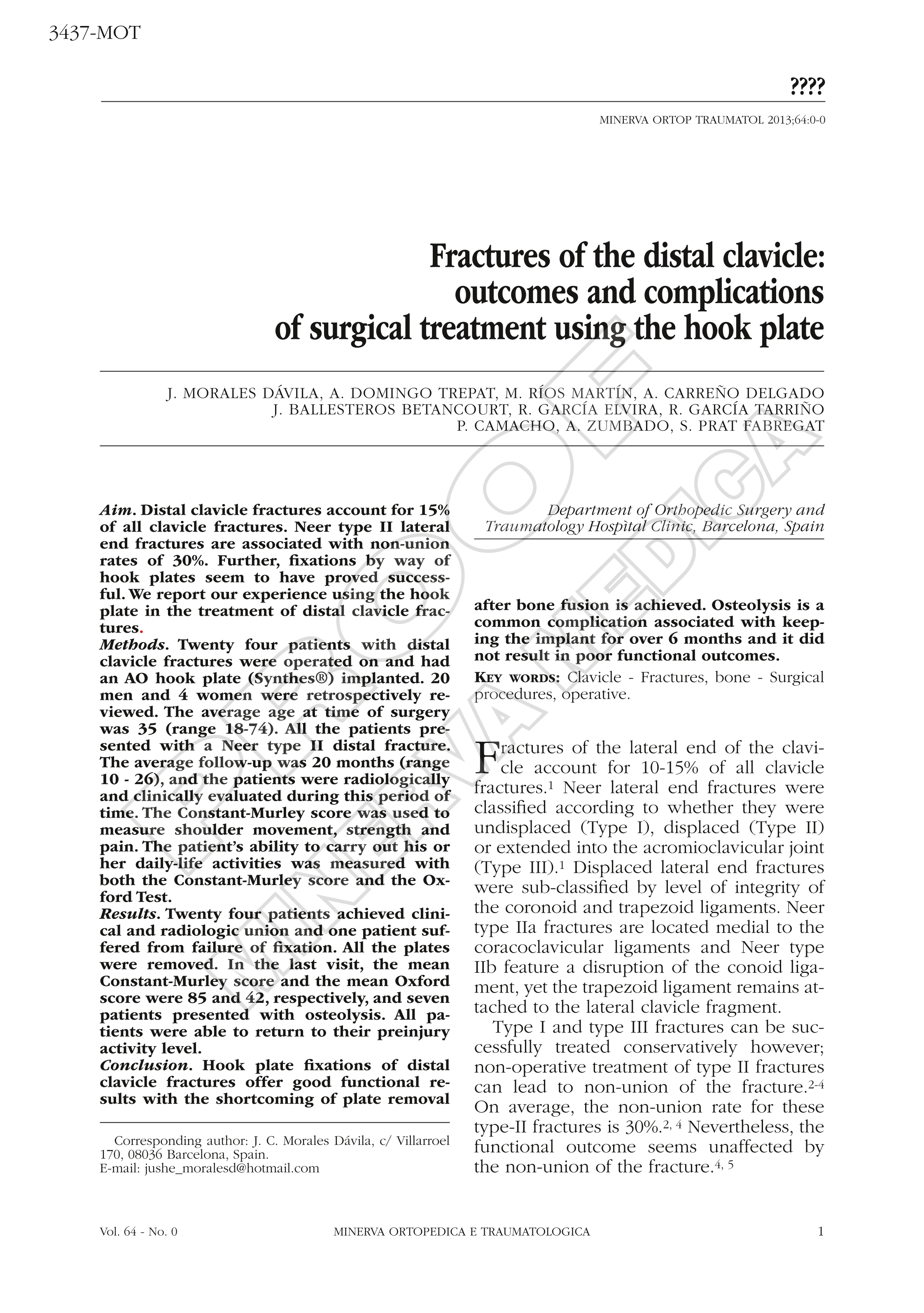
Resumen: Aim: Distal clavicle fractures account for 15% of all clavicle fractures. Neer type II lateral end fractures are associated with non-union rates of 30%. Further, fixations by way of hook plates seem to have proved successful. We report our experience using the hook plate in the treatment of distal clavicle fractures.
Methods: Twenty four patients with distal clavicle fractures were operated on and had an AO hook plate (Synthes®) implanted. 20 men and 4 women were retrospectively reviewed. The average age at time of surgery was 35 (range 18-74). All the patients presented with a Neer type II distal fracture. The average follow-up was 20 months (range 10 - 26), and the patients were radiologically and clinically evaluated during this period of time. The Constant-Murley score was used to measure shoulder movement, strength and pain. The patient’s ability to carry out his or her daily-life activities was measured with both the Constant-Murley score and the Oxford Test.
Results: Twenty four patients achieved clinical and radiologic union and one patient suffered from failure of fixation. All the plates were removed. In the last visit, the mean Constant-Murley score and the mean Oxford score were 85 and 42, respectively, and seven patients presented with osteolysis. All patients were able to return to their preinjury activity level.
Conclusion: Hook plate fixations of distal clavicle fractures offer good functional results with the shortcoming of plate removal after bone fusion is achieved. Osteolysis is a common complication associated with keeping the implant for over 6 months and it did not result in poor functional outcomes.
Idioma: Inglés
Año: 2013
Publicado en: MINERVA ORTOPEDICA E TRAUMATOLOGICA 64, 3 (2013), 333 - 340
ISSN: 0394-3410
Tipo y forma: Artículo (Versión definitiva)
 Debe reconocer adecuadamente la autoría, proporcionar un enlace a la licencia e indicar si se han realizado cambios. Puede hacerlo de cualquier manera razonable, pero no de una manera que sugiera que tiene el apoyo del licenciador o lo recibe por el uso que hace.
Exportado de SIDERAL (2026-01-16-14:54:51)
Visitas y descargas
Methods: Twenty four patients with distal clavicle fractures were operated on and had an AO hook plate (Synthes®) implanted. 20 men and 4 women were retrospectively reviewed. The average age at time of surgery was 35 (range 18-74). All the patients presented with a Neer type II distal fracture. The average follow-up was 20 months (range 10 - 26), and the patients were radiologically and clinically evaluated during this period of time. The Constant-Murley score was used to measure shoulder movement, strength and pain. The patient’s ability to carry out his or her daily-life activities was measured with both the Constant-Murley score and the Oxford Test.
Results: Twenty four patients achieved clinical and radiologic union and one patient suffered from failure of fixation. All the plates were removed. In the last visit, the mean Constant-Murley score and the mean Oxford score were 85 and 42, respectively, and seven patients presented with osteolysis. All patients were able to return to their preinjury activity level.
Conclusion: Hook plate fixations of distal clavicle fractures offer good functional results with the shortcoming of plate removal after bone fusion is achieved. Osteolysis is a common complication associated with keeping the implant for over 6 months and it did not result in poor functional outcomes.
Idioma: Inglés
Año: 2013
Publicado en: MINERVA ORTOPEDICA E TRAUMATOLOGICA 64, 3 (2013), 333 - 340
ISSN: 0394-3410
Tipo y forma: Artículo (Versión definitiva)
Debe reconocer adecuadamente la autoría, proporcionar un enlace a la licencia e indicar si se han realizado cambios. Puede hacerlo de cualquier manera razonable, pero no de una manera que sugiera que tiene el apoyo del licenciador o lo recibe por el uso que hace. Exportado de SIDERAL (2026-01-16-14:54:51)
Enlace permanente:
Visitas y descargas
Este artículo se encuentra en las siguientes colecciones:
Artículos
Registro creado el 2026-01-16, última modificación el 2026-01-16