Antibiotic use for respiratory tract infections in nursing homes: a multicentre cross-sectional study
Llor, Carl ; Morros, Rosa ; Mateos-Nozal, Jesús ; Zárate Sáez, Carlota Manuela ; Vaquero Pinto, María N. ; Rodríguez Jiménez, Consuelo ; Sáez Bejar, Carmen ; Magallón-Botaya, Rosa (Universidad de Zaragoza) ; Matovelle, Priscila ; Navarro Sanmartín, Alicia ; López Pérez, Elena ; García-Sangenís, Ana ; Monfà, Ramon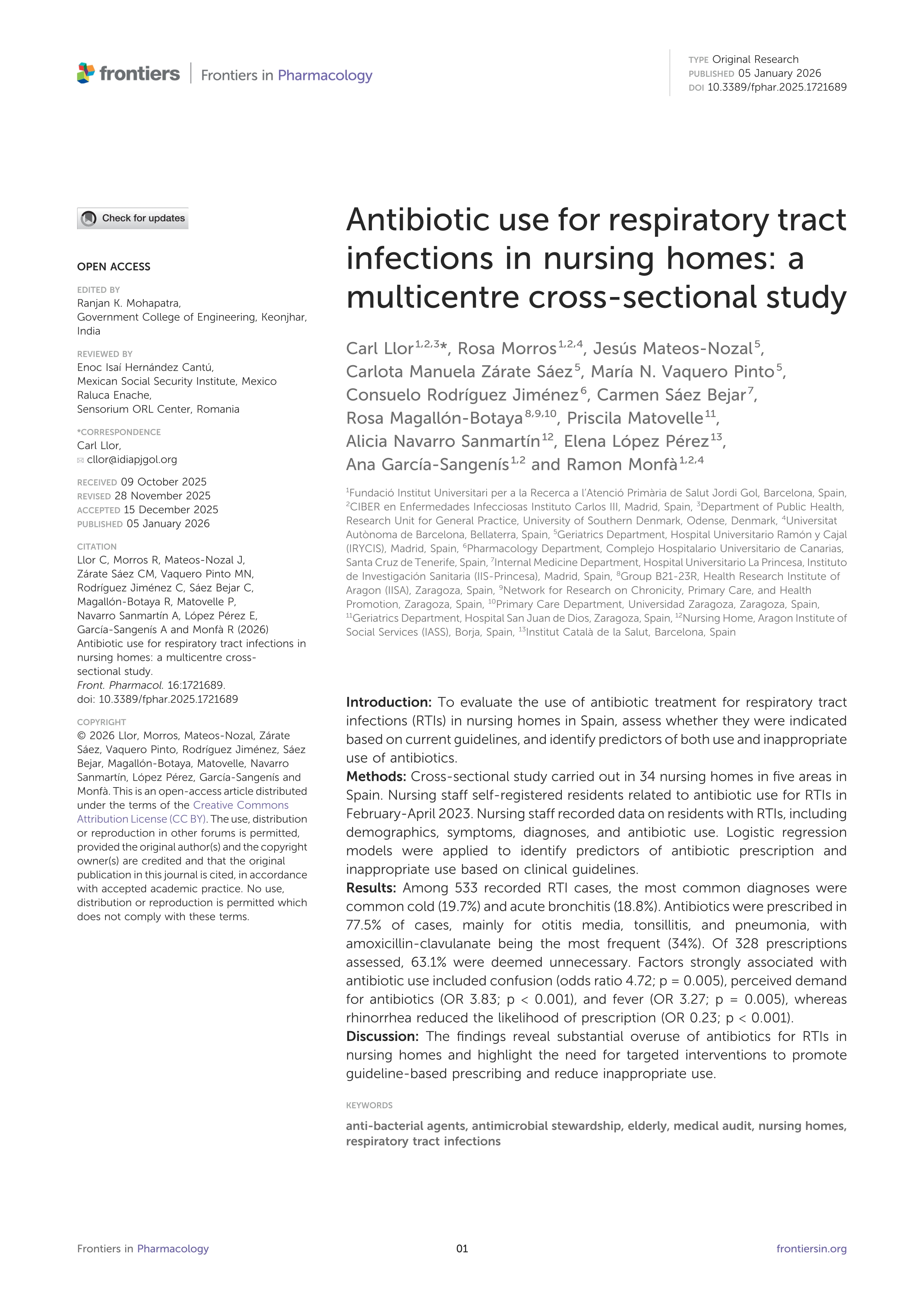
Resumen: Introduction: To evaluate the use of antibiotic treatment for respiratory tract infections (RTIs) in nursing homes in Spain, assess whether they were indicated based on current guidelines, and identify predictors of both use and inappropriate use of antibiotics.
Methods: Cross-sectional study carried out in 34 nursing homes in five areas in Spain. Nursing staff self-registered residents related to antibiotic use for RTIs in February-April 2023. Nursing staff recorded data on residents with RTIs, including demographics, symptoms, diagnoses, and antibiotic use. Logistic regression models were applied to identify predictors of antibiotic prescription and inappropriate use based on clinical guidelines.
Results: Among 533 recorded RTI cases, the most common diagnoses were common cold (19.7%) and acute bronchitis (18.8%). Antibiotics were prescribed in 77.5% of cases, mainly for otitis media, tonsillitis, and pneumonia, with amoxicillin-clavulanate being the most frequent (34%). Of 328 prescriptions assessed, 63.1% were deemed unnecessary. Factors strongly associated with antibiotic use included confusion (odds ratio 4.72; p = 0.005), perceived demand for antibiotics (OR 3.83; p < 0.001), and fever (OR 3.27; p = 0.005), whereas rhinorrhea reduced the likelihood of prescription (OR 0.23; p < 0.001).
Discussion: The findings reveal substantial overuse of antibiotics for RTIs in nursing homes and highlight the need for targeted interventions to promote guideline-based prescribing and reduce inappropriate use.
Idioma: Inglés
DOI: 10.3389/fphar.2025.1721689
Año: 2025
Publicado en: Frontiers in Pharmacology 16 (2025), [11 pp.]
ISSN: 1663-9812
Tipo y forma: Artículo (Versión definitiva)
Área (Departamento): Area Medicina (Dpto. Medicina, Psiqu. y Derm.)
 Debe reconocer adecuadamente la autoría, proporcionar un enlace a la licencia e indicar si se han realizado cambios. Puede hacerlo de cualquier manera razonable, pero no de una manera que sugiera que tiene el apoyo del licenciador o lo recibe por el uso que hace.
Exportado de SIDERAL (2026-02-05-14:36:50)
Visitas y descargas
Methods: Cross-sectional study carried out in 34 nursing homes in five areas in Spain. Nursing staff self-registered residents related to antibiotic use for RTIs in February-April 2023. Nursing staff recorded data on residents with RTIs, including demographics, symptoms, diagnoses, and antibiotic use. Logistic regression models were applied to identify predictors of antibiotic prescription and inappropriate use based on clinical guidelines.
Results: Among 533 recorded RTI cases, the most common diagnoses were common cold (19.7%) and acute bronchitis (18.8%). Antibiotics were prescribed in 77.5% of cases, mainly for otitis media, tonsillitis, and pneumonia, with amoxicillin-clavulanate being the most frequent (34%). Of 328 prescriptions assessed, 63.1% were deemed unnecessary. Factors strongly associated with antibiotic use included confusion (odds ratio 4.72; p = 0.005), perceived demand for antibiotics (OR 3.83; p < 0.001), and fever (OR 3.27; p = 0.005), whereas rhinorrhea reduced the likelihood of prescription (OR 0.23; p < 0.001).
Discussion: The findings reveal substantial overuse of antibiotics for RTIs in nursing homes and highlight the need for targeted interventions to promote guideline-based prescribing and reduce inappropriate use.
Idioma: Inglés
DOI: 10.3389/fphar.2025.1721689
Año: 2025
Publicado en: Frontiers in Pharmacology 16 (2025), [11 pp.]
ISSN: 1663-9812
Tipo y forma: Artículo (Versión definitiva)
Área (Departamento): Area Medicina (Dpto. Medicina, Psiqu. y Derm.)
Debe reconocer adecuadamente la autoría, proporcionar un enlace a la licencia e indicar si se han realizado cambios. Puede hacerlo de cualquier manera razonable, pero no de una manera que sugiera que tiene el apoyo del licenciador o lo recibe por el uso que hace. Exportado de SIDERAL (2026-02-05-14:36:50)
Enlace permanente:
Visitas y descargas
Este artículo se encuentra en las siguientes colecciones:
Artículos > Artículos por área > Medicina
Registro creado el 2026-02-05, última modificación el 2026-02-05