The role of avatars in language learning in the Metaverse
González Vallejo, Rubén (Universidad de Zaragoza)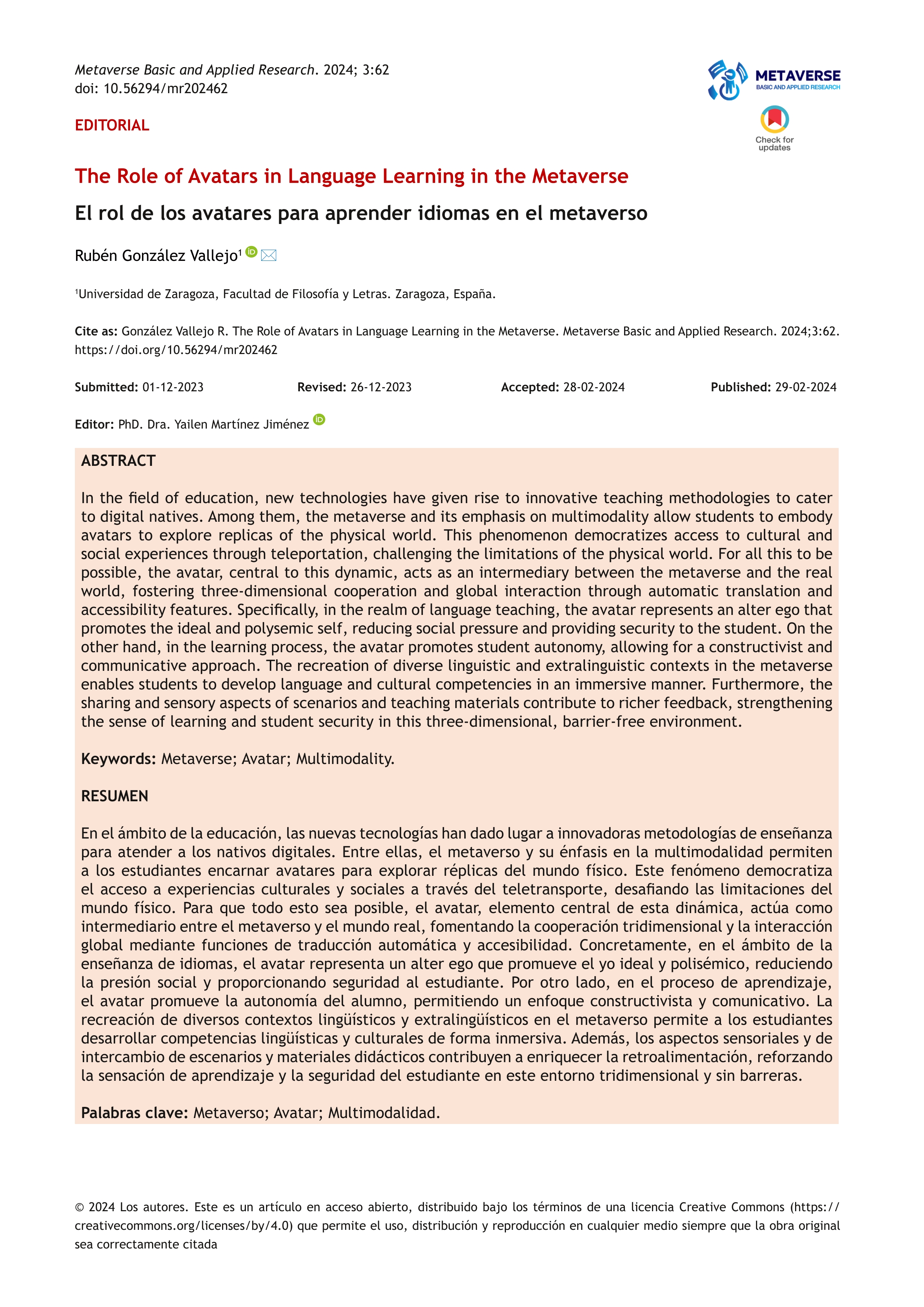
Resumen: In the field of education, new technologies have given rise to innovative teaching methodologies to cater to digital natives. Among them, the metaverse and its emphasis on multimodality allow students to embody avatars to explore replicas of the physical world. This phenomenon democratizes access to cultural and social experiences through teleportation, challenging the limitations of the physical world. For all this to be possible, the avatar, central to this dynamic, acts as an intermediary between the metaverse and the real world, fostering three-dimensional cooperation and global interaction through automatic translation and accessibility features. Specifically, in the realm of language teaching, the avatar represents an alter ego that promotes the ideal and polysemic self, reducing social pressure and providing security to the student. On the other hand, in the learning process, the avatar promotes student autonomy, allowing for a constructivist and communicative approach. The recreation of diverse linguistic and extralinguistic contexts in the metaverse enables students to develop language and cultural competencies in an immersive manner. Furthermore, the sharing and sensory aspects of scenarios and teaching materials contribute to richer feedback, strengthening the sense of learning and student security in this three-dimensional, barrier-free environment.
En el ámbito de la educación, las nuevas tecnologías han dado lugar a innovadoras metodologías de enseñanza para atender a los nativos digitales. Entre ellas, el metaverso y su énfasis en la multimodalidad permiten a los estudiantes encarnar avatares para explorar réplicas del mundo físico. Este fenómeno democratiza el acceso a experiencias culturales y sociales a través del teletransporte, desafiando las limitaciones del mundo físico. Para que todo esto sea posible, el avatar, elemento central de esta dinámica, actúa como intermediario entre el metaverso y el mundo real, fomentando la cooperación tridimensional y la interacción global mediante funciones de traducción automática y accesibilidad. Concretamente, en el ámbito de la enseñanza de idiomas, el avatar representa un alter ego que promueve el yo ideal y polisémico, reduciendo la presión social y proporcionando seguridad al estudiante. Por otro lado, en el proceso de aprendizaje, el avatar promueve la autonomía del alumno, permitiendo un enfoque constructivista y comunicativo. La recreación de diversos contextos lingüísticos y extralingüísticos en el metaverso permite a los estudiantes desarrollar competencias lingüísticas y culturales de forma inmersiva. Además, los aspectos sensoriales y de intercambio de escenarios y materiales didácticos contribuyen a enriquecer la retroalimentación, reforzando la sensación de aprendizaje y la seguridad del estudiante en este entorno tridimensional y sin barreras.
Idioma: Inglés
DOI: 10.56294/mr202462
Año: 2024
Publicado en: Metaverse Basic and Applied Research 3, 62 (2024), 3
ISSN: 2953-4577
Tipo y forma: Article (Published version)
Área (Departamento): Área Filología Italiana (Dpto. Lingüíst.y Liter.Hispán.)
 You must give appropriate credit, provide a link to the license, and indicate if changes were made. You may do so in any reasonable manner, but not in any way that suggests the licensor endorses you or your use.
Exportado de SIDERAL (2025-10-17-14:21:27)
Visitas y descargas
En el ámbito de la educación, las nuevas tecnologías han dado lugar a innovadoras metodologías de enseñanza para atender a los nativos digitales. Entre ellas, el metaverso y su énfasis en la multimodalidad permiten a los estudiantes encarnar avatares para explorar réplicas del mundo físico. Este fenómeno democratiza el acceso a experiencias culturales y sociales a través del teletransporte, desafiando las limitaciones del mundo físico. Para que todo esto sea posible, el avatar, elemento central de esta dinámica, actúa como intermediario entre el metaverso y el mundo real, fomentando la cooperación tridimensional y la interacción global mediante funciones de traducción automática y accesibilidad. Concretamente, en el ámbito de la enseñanza de idiomas, el avatar representa un alter ego que promueve el yo ideal y polisémico, reduciendo la presión social y proporcionando seguridad al estudiante. Por otro lado, en el proceso de aprendizaje, el avatar promueve la autonomía del alumno, permitiendo un enfoque constructivista y comunicativo. La recreación de diversos contextos lingüísticos y extralingüísticos en el metaverso permite a los estudiantes desarrollar competencias lingüísticas y culturales de forma inmersiva. Además, los aspectos sensoriales y de intercambio de escenarios y materiales didácticos contribuyen a enriquecer la retroalimentación, reforzando la sensación de aprendizaje y la seguridad del estudiante en este entorno tridimensional y sin barreras.
Idioma: Inglés
DOI: 10.56294/mr202462
Año: 2024
Publicado en: Metaverse Basic and Applied Research 3, 62 (2024), 3
ISSN: 2953-4577
Tipo y forma: Article (Published version)
Área (Departamento): Área Filología Italiana (Dpto. Lingüíst.y Liter.Hispán.)
You must give appropriate credit, provide a link to the license, and indicate if changes were made. You may do so in any reasonable manner, but not in any way that suggests the licensor endorses you or your use. Exportado de SIDERAL (2025-10-17-14:21:27)
Permalink:
Visitas y descargas
Este artículo se encuentra en las siguientes colecciones:
Articles > Artículos por área > Filología Italiana
Record created 2025-07-10, last modified 2025-10-17