Prescription Trends and Clinical Decision‐Making in Neuropathic Pain Pharmacological Treatment: Results From a Cross‐Sectional Survey by the Spanish Pain Society
Huerta, Miguel Á. ; Mayo-Moldes, Mónica ; Garcia, Miguel M. ; García-Parra, Beliu ; Matute, Mercè ; López-Tofiño, Yolanda ; Paniagua, Nancy ; Hernández-Secorún, Mar ; Soler, Dolors ; Salmerón, Marcos ; Taylor, Julian ; Verdú, Enrique ; Valencia, José A. ; Pico, Silvia ; Díaz-Alejo, Clara ; Katsuki, Masahito ; Serrano-Afonso, Ancor ; Ruiz-Cantero, M. Carmen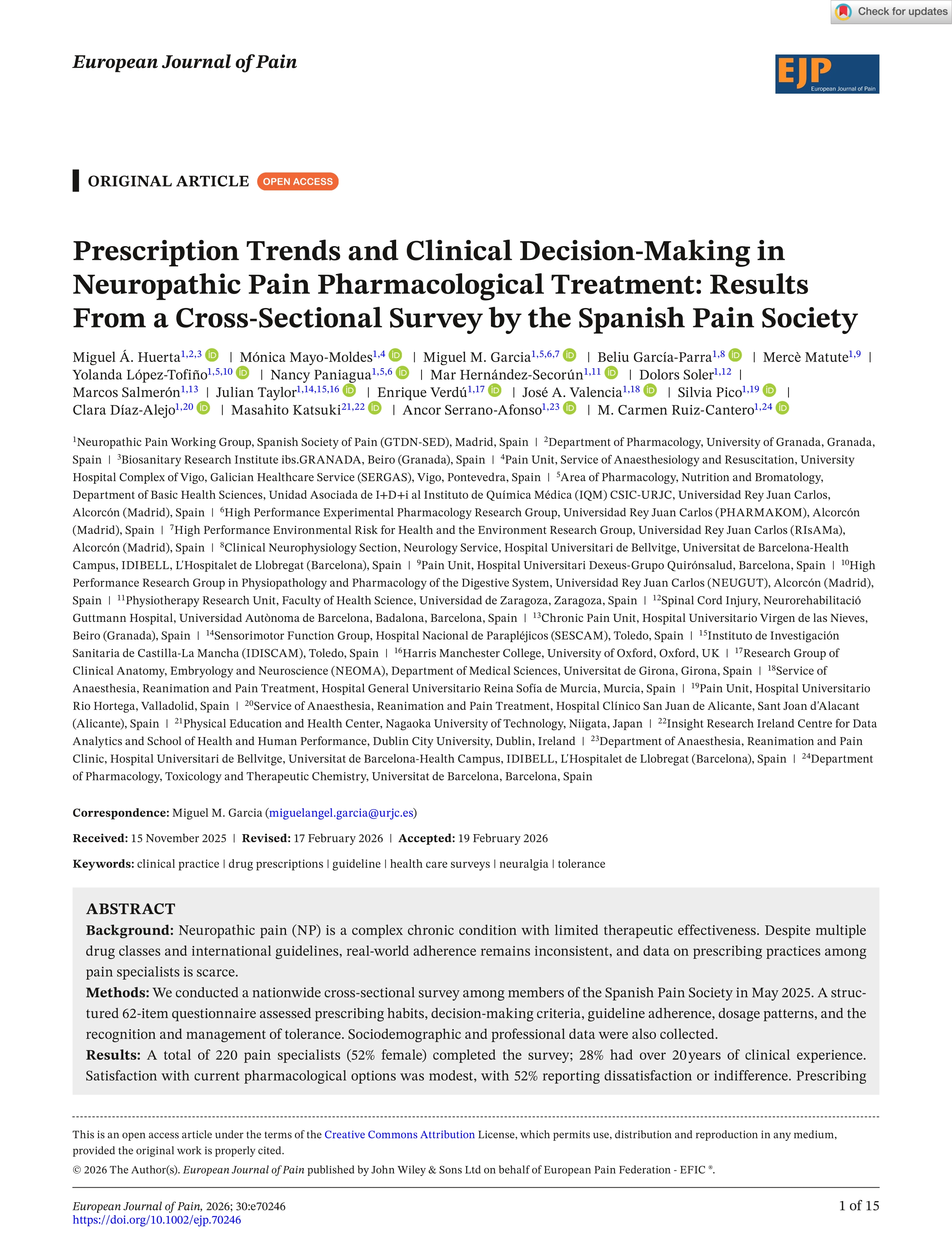
Resumen: Neuropathic pain (NP) is a complex chronic condition with limited therapeutic effectiveness. Despite multiple drug classes and international guidelines, real-world adherence remains inconsistent, and data on prescribing practices among pain specialists is scarce.
Methods. We conducted a nationwide cross-sectional survey among members of the Spanish Pain Society in May 2025. A structured 62-item questionnaire assessed prescribing habits, decision-making criteria, guideline adherence, dosage patterns, and the recognition and management of tolerance. Sociodemographic and professional data were also collected.
Results. A total of 220 pain specialists (52% female) completed the survey; 28% had over 20 years of clinical experience. Satisfaction with current pharmacological options was modest, with 52% reporting dissatisfaction or indifference. Prescribing was mainly guided by clinical experience (43%) and guideline recommendations (36%). Gabapentin (45%) and pregabalin (40%) were the most frequent first-line choices, followed by tricyclic antidepressants (amitriptyline; 9%), duloxetine (5%) and venlafaxine (1%). Tramadol dominated second-line use (65%), followed by capsaicin (22%) or lidocaine (5%) patches. Half of the participants reported tolerance, typically after 3–12 months, managed mainly by dose escalation or switching drug classes. Dosage practices for gabapentinoids and antidepressants showed marked heterogeneity, with frequent deviations from recommended titration protocols.
Conclusions. NP management in Spain shows variability and partial alignment with international guidelines. Gabapentinoids, tricyclic antidepressants and duloxetine remain preferred treatments, but reliance on personal experience and awareness of tolerance hinder evidence-based practice. Quantifying Spanish pain specialists' views on tolerance supports calls for national consensus, better dosing education and further research to harmonise care and improve outcomes.
Significance. This nationwide survey provides the first systematic assessment of neuropathic pain management in Spain, revealing marked variability, only partial adherence to international guidelines, and persistent reliance on clinical experience over evidence. It confirms gabapentinoids, tricyclic antidepressants and duloxetine as preferred treatments, identifies continued tramadol use despite conflicting recommendations, and quantifies for the first time clinicians' perception and management of tolerance. These findings fill a major evidence gap and directly inform future national consensus, educational initiatives and clinical practice improvement.
Idioma: Inglés
DOI: 10.1002/ejp.70246
Año: 2026
Publicado en: EUROPEAN JOURNAL OF PAIN 30, 3 (2026), 15 pp.
ISSN: 1090-3801
Tipo y forma: Article (Published version)
 You must give appropriate credit, provide a link to the license, and indicate if changes were made. You may do so in any reasonable manner, but not in any way that suggests the licensor endorses you or your use.
Exportado de SIDERAL (2026-03-26-14:32:04)
Visitas y descargas
Methods. We conducted a nationwide cross-sectional survey among members of the Spanish Pain Society in May 2025. A structured 62-item questionnaire assessed prescribing habits, decision-making criteria, guideline adherence, dosage patterns, and the recognition and management of tolerance. Sociodemographic and professional data were also collected.
Results. A total of 220 pain specialists (52% female) completed the survey; 28% had over 20 years of clinical experience. Satisfaction with current pharmacological options was modest, with 52% reporting dissatisfaction or indifference. Prescribing was mainly guided by clinical experience (43%) and guideline recommendations (36%). Gabapentin (45%) and pregabalin (40%) were the most frequent first-line choices, followed by tricyclic antidepressants (amitriptyline; 9%), duloxetine (5%) and venlafaxine (1%). Tramadol dominated second-line use (65%), followed by capsaicin (22%) or lidocaine (5%) patches. Half of the participants reported tolerance, typically after 3–12 months, managed mainly by dose escalation or switching drug classes. Dosage practices for gabapentinoids and antidepressants showed marked heterogeneity, with frequent deviations from recommended titration protocols.
Conclusions. NP management in Spain shows variability and partial alignment with international guidelines. Gabapentinoids, tricyclic antidepressants and duloxetine remain preferred treatments, but reliance on personal experience and awareness of tolerance hinder evidence-based practice. Quantifying Spanish pain specialists' views on tolerance supports calls for national consensus, better dosing education and further research to harmonise care and improve outcomes.
Significance. This nationwide survey provides the first systematic assessment of neuropathic pain management in Spain, revealing marked variability, only partial adherence to international guidelines, and persistent reliance on clinical experience over evidence. It confirms gabapentinoids, tricyclic antidepressants and duloxetine as preferred treatments, identifies continued tramadol use despite conflicting recommendations, and quantifies for the first time clinicians' perception and management of tolerance. These findings fill a major evidence gap and directly inform future national consensus, educational initiatives and clinical practice improvement.
Idioma: Inglés
DOI: 10.1002/ejp.70246
Año: 2026
Publicado en: EUROPEAN JOURNAL OF PAIN 30, 3 (2026), 15 pp.
ISSN: 1090-3801
Tipo y forma: Article (Published version)
You must give appropriate credit, provide a link to the license, and indicate if changes were made. You may do so in any reasonable manner, but not in any way that suggests the licensor endorses you or your use. Exportado de SIDERAL (2026-03-26-14:32:04)
Permalink:
Visitas y descargas
Este artículo se encuentra en las siguientes colecciones:
Articles
Record created 2026-03-26, last modified 2026-04-07