Genome size evolution in Helianthemum (Cistaceae): Dynamic genomes within a conserved chromosomal framework
Martín-Hernanz, Sara ; Albaladejo, Rafael G. ; Viruel, Juan (Universidad de Zaragoza) ; Matos, Rafael ; Lopes, Sara Brito ; Rubio, Encarnación ; Castro, Mariana ; Loureiro, João ; Volkova, Polina ; Aparicio, Abelardo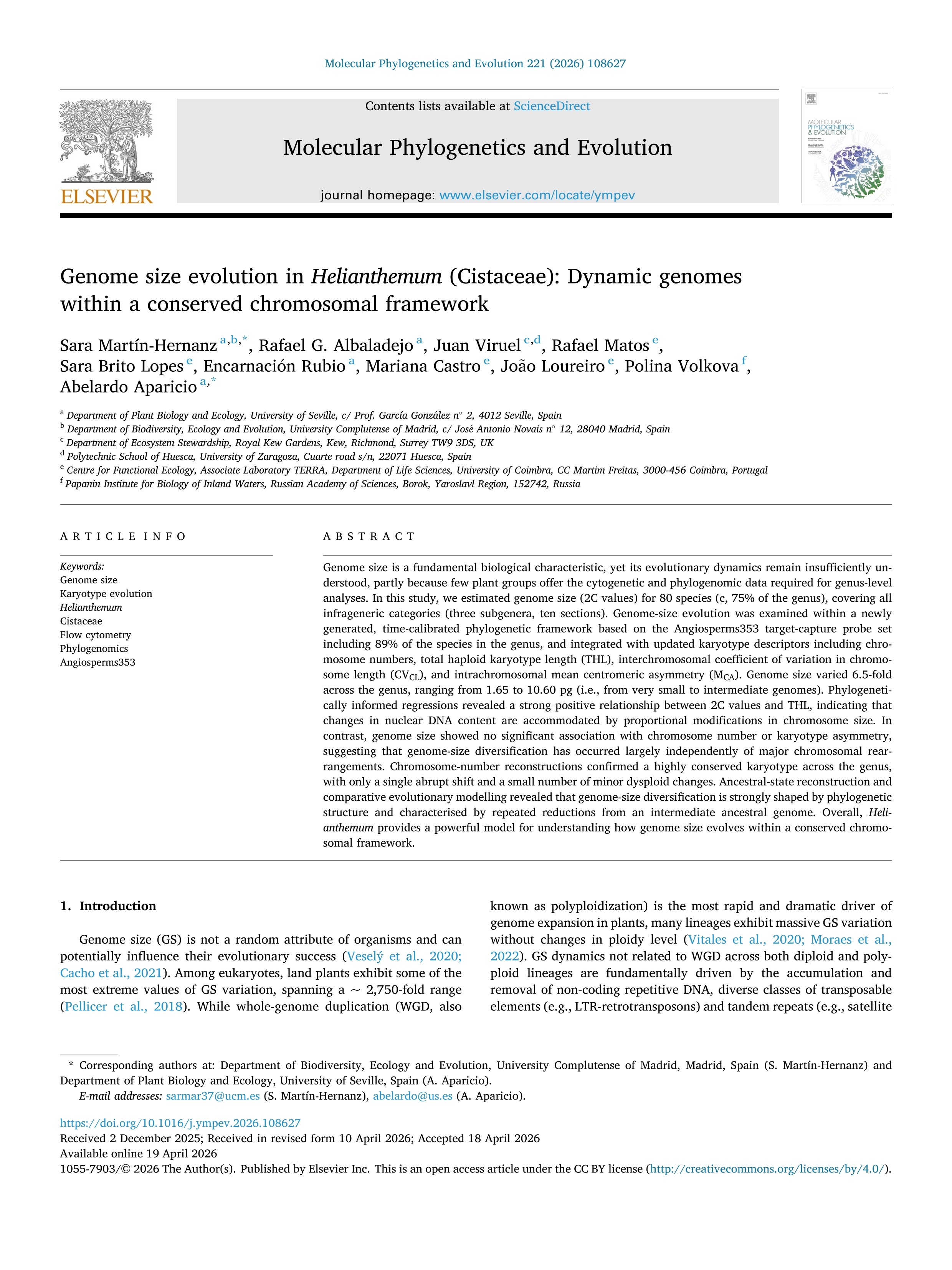
Resumen: Genome size is a fundamental biological characteristic, yet its evolutionary dynamics remain insufficiently understood, partly because few plant groups offer the cytogenetic and phylogenomic data required for genus-level analyses. In this study, we estimated genome size (2C values) for 80 species (c, 75% of the genus), covering all infrageneric categories (three subgenera, ten sections). Genome-size evolution was examined within a newly generated, time-calibrated phylogenetic framework based on the Angiosperms353 target-capture probe set including 89% of the species in the genus, and integrated with updated karyotype descriptors including chromosome numbers, total haploid karyotype length (THL), interchromosomal coefficient of variation in chromosome length (CVCL), and intrachromosomal mean centromeric asymmetry (MCA). Genome size varied 6.5-fold across the genus, ranging from 1.65 to 10.60 pg (i.e., from very small to intermediate genomes). Phylogenetically informed regressions revealed a strong positive relationship between 2C values and THL, indicating that changes in nuclear DNA content are accommodated by proportional modifications in chromosome size. In contrast, genome size showed no significant association with chromosome number or karyotype asymmetry, suggesting that genome-size diversification has occurred largely independently of major chromosomal rearrangements. Chromosome-number reconstructions confirmed a highly conserved karyotype across the genus, with only a single abrupt shift and a small number of minor dysploid changes. Ancestral-state reconstruction and comparative evolutionary modelling revealed that genome-size diversification is strongly shaped by phylogenetic structure and characterised by repeated reductions from an intermediate ancestral genome. Overall, Helianthemum provides a powerful model for understanding how genome size evolves within a conserved chromosomal framework.
Idioma: Inglés
DOI: 10.1016/j.ympev.2026.108627
Año: 2026
Publicado en: MOLECULAR PHYLOGENETICS AND EVOLUTION 221 (2026), 108627 [13 pp.]
ISSN: 1055-7903
Tipo y forma: Article (Published version)
Área (Departamento): Área Botánica (Dpto. CC.Agrar.y Medio Natural)
 You must give appropriate credit, provide a link to the license, and indicate if changes were made. You may do so in any reasonable manner, but not in any way that suggests the licensor endorses you or your use.
Exportado de SIDERAL (2026-05-06-13:58:39)
Visitas y descargas
Idioma: Inglés
DOI: 10.1016/j.ympev.2026.108627
Año: 2026
Publicado en: MOLECULAR PHYLOGENETICS AND EVOLUTION 221 (2026), 108627 [13 pp.]
ISSN: 1055-7903
Tipo y forma: Article (Published version)
Área (Departamento): Área Botánica (Dpto. CC.Agrar.y Medio Natural)
You must give appropriate credit, provide a link to the license, and indicate if changes were made. You may do so in any reasonable manner, but not in any way that suggests the licensor endorses you or your use. Exportado de SIDERAL (2026-05-06-13:58:39)
Permalink:
Visitas y descargas
Este artículo se encuentra en las siguientes colecciones:
Articles > Artículos por área > Botánica
Record created 2026-05-06, last modified 2026-05-06